Why Is My House Exterior Turning Green? Algae, Moss & Lichen Explained
You look at your house from the drive, and there it is: a film of green or dark grey creeping across your render, brick, or concrete. It's not dirt. Your windows might be spotless, but the rest of your exterior looks tired. Your house is growing things. And understanding what's growing, and why, is the first step to dealing with it.
Algae, Moss, and Lichen: What's the Difference?
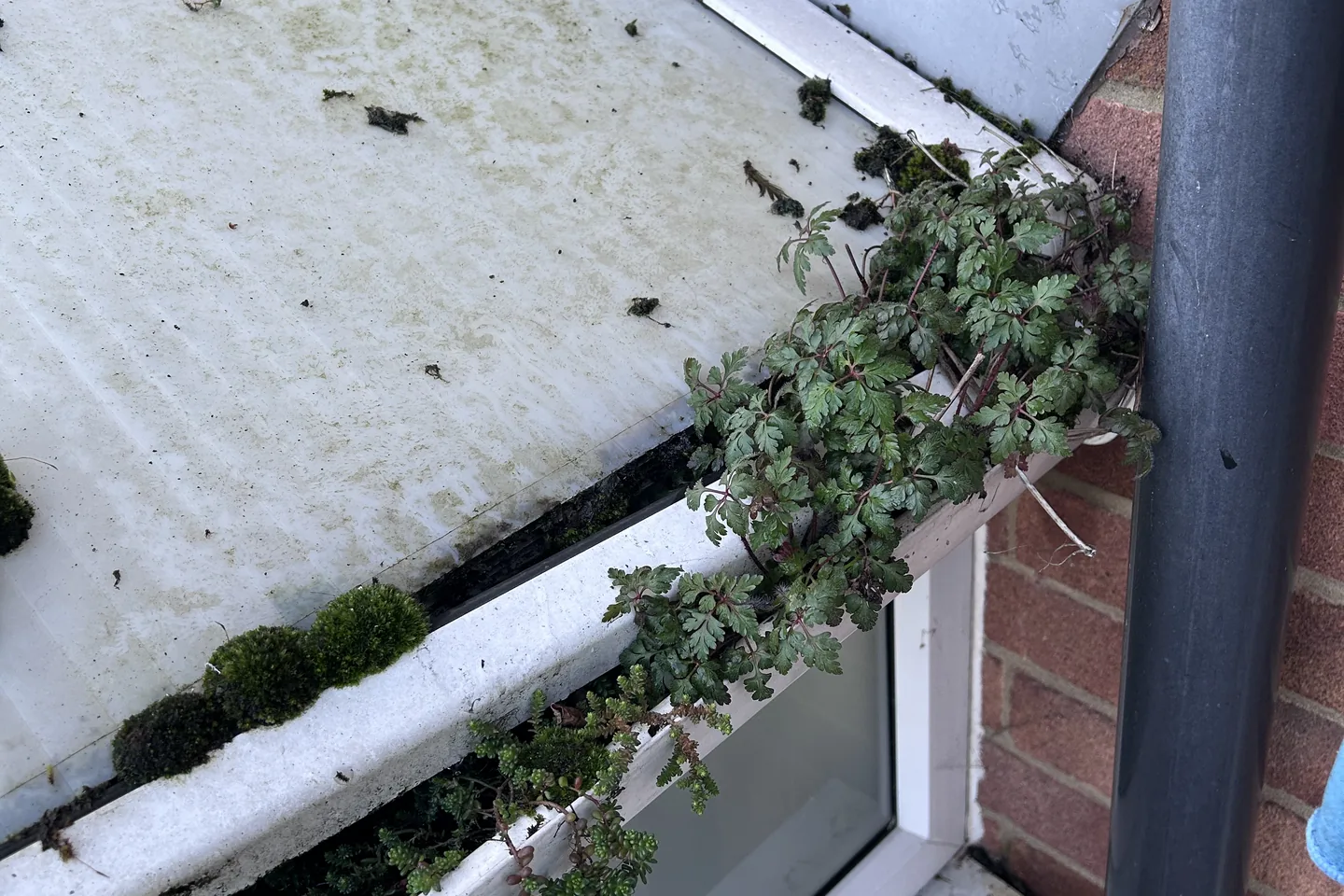
Most Essex homeowners lump these together as "green stuff," but they're actually different organisms with different growth patterns.
Algae is a single-celled organism that loves moisture and creates a slippery, slimy green film. It grows quickly on damp surfaces and is particularly common on north-facing walls where the sun doesn't reach. Render, brick, and concrete are all susceptible. It looks like a thin coating, and it makes surfaces slippery in wet weather. A genuine slip hazard on paths and patios.
Moss is a small plant that thrives in shade and dampness. Unlike algae, it has structure. Little fuzzy bumps, and holds onto moisture even after rain. It grows in larger patches and can retain significant water weight, which is why it damages surfaces faster. You'll often see moss between roof tiles, on gutters, and in the shadiest corners of your property.
Lichen is a combination of algae and fungus living together. It's slower-growing than moss or algae alone, but more persistent. It creates crusty or leafy patches, often in grey or orange tones, and it's incredibly stubborn. Lichen is common on render in villages like Hadstock and Great Chesterford, where properties sit in established gardens with mature trees.
Why Does It Grow Here?
If you live in Essex, particularly in the villages around Saffron Walden, Newport, Elsenham, Stansted Mountfitchet, Clavering, and Langley, you've got the perfect storm of conditions for algae, moss, and lichen growth:
- Shade and moisture. Many Essex homes are surrounded by mature trees and sit in valleys or hollows. The shade plus the dampness from regular rainfall creates ideal growing conditions.
- North-facing walls. These get less direct sunlight and stay damp longer. If your main elevation faces north, you'll see growth faster than a south-facing property.
- Rendered or porous surfaces. Render, brick, and stone absorb and hold moisture. Smooth painted surfaces resist growth better than rough, porous materials.
- Proximity to vegetation. If you've got hedges, ivy, or climbing plants near your walls, they trap moisture. The spores from moss and algae travel on the wind but need damp conditions to settle and grow.
It's Not Just Ugly
Many homeowners think the green growth is just a cosmetic issue. It's not. Here's what actually happens:
Surfaces become slippery. Algae on patios and paths is genuinely dangerous. It holds moisture and becomes slick underfoot, especially in autumn and winter. If you've got elderly relatives visiting, or grandchildren playing in the garden, this is a safety issue.
Growth damages material. Moss and lichen trap water against your render or brick. That moisture penetrates the material, weakens it, and causes frost damage in winter. Over time, you'll see spalling (flaking) of render, deterioration of brick, and structural issues.
Gutters and flashings get blocked. If algae and moss grow on your roof, tiles, gutters, and fascias, they trap water and prevent drainage. This leads to damp, water penetration, and eventually rot. The expensive kind.
It spreads. Once algae or moss gets a foothold, it grows. It releases spores that spread to other surfaces on your property and your neighbours' properties too.
Which Surfaces Are Most Affected?
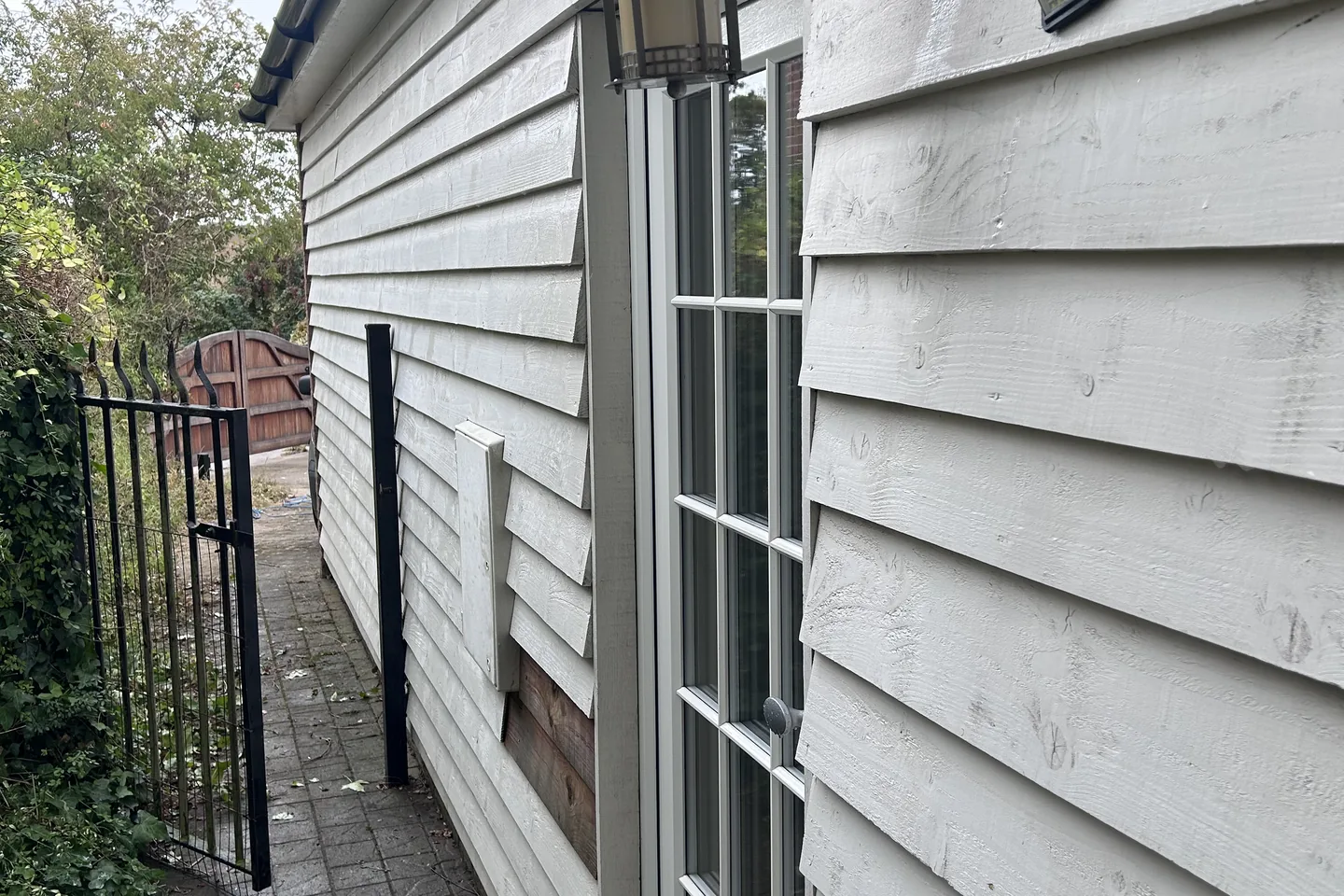
In a typical Essex home, you'll see growth on:
- Render and brick walls. Especially north-facing or shaded areas
- Patios and paths. Particularly those in shade or under tree cover
- Roof tiles and gutters. Where moisture accumulates
- Conservatory roofs, common problem where polycarbonate collects debris and algae
- Cladding, soffit, fascia, and other cladding materials trap moisture
- Concrete driveways. Especially at edges and in shaded corners
What Can You Do About It?
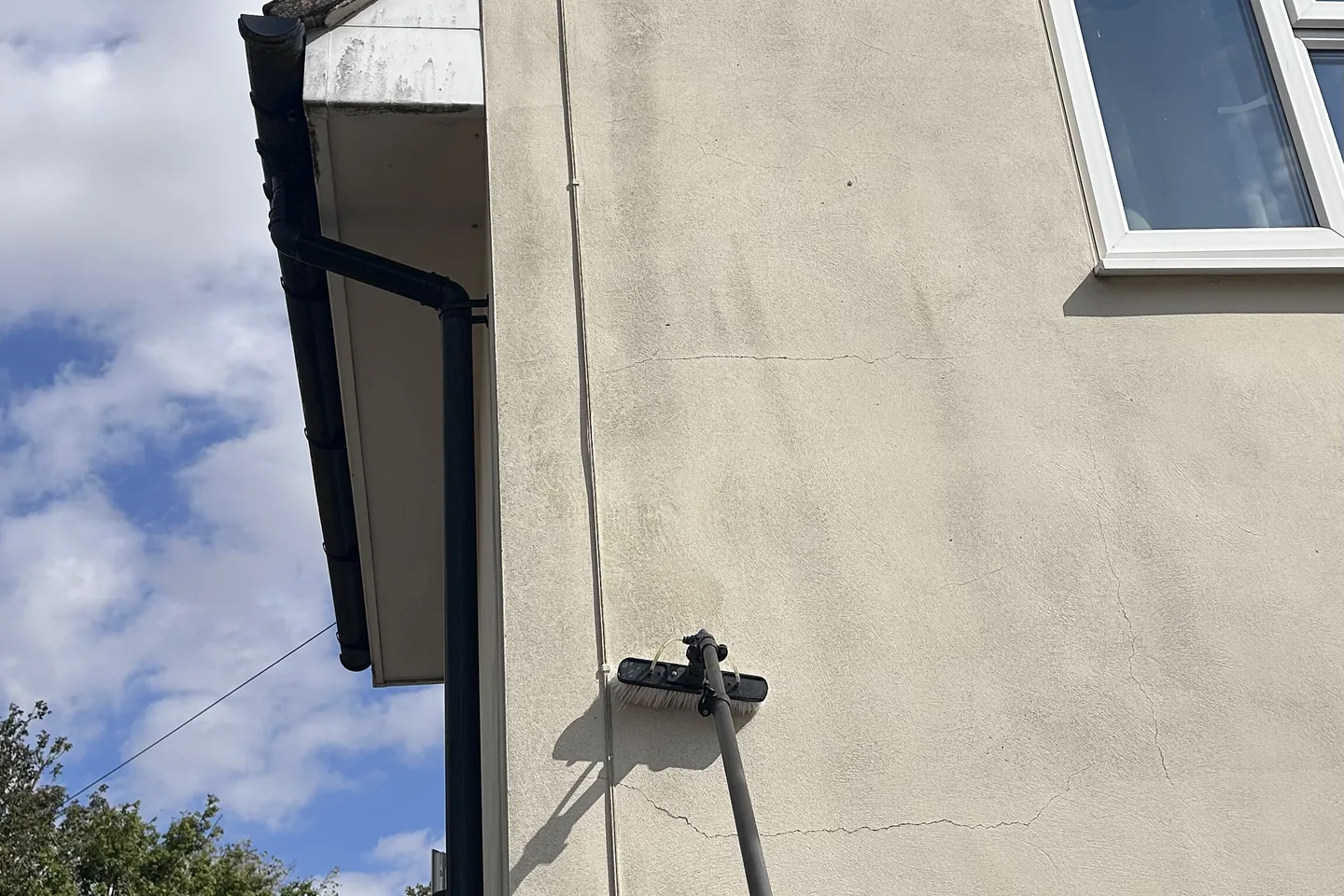
Professional cleaning is the most effective option. A soft wash, using low-pressure water and biodegradable cleaning agents, removes algae, moss, and lichen without damaging underlying materials. This is very different from pressure washing, which can damage render, brick, and other surfaces. That is the method behind our full exterior package, and on a rendered or clad wall it is the same job as cladding cleaning.
Regular cleaning (annually or twice-yearly) keeps surfaces looking good and prevents structural damage. Once the growth is removed, you've got breathing room to improve drainage, trim back vegetation, or make other changes that reduce conditions favoring regrowth.
Frequently Asked Questions
Is the green stuff on my house dangerous?
It depends on where it is. Algae on patios and paths is a genuine slip hazard, especially for older adults and children. Growth on walls and roofs takes longer to bite. It will eventually damage the material. In gutters and on fascias, it prevents water drainage and can lead to serious water damage inside your home.
Will pressure washing remove it?
Pressure washing will remove surface growth, but it can damage render, brick, and other materials. High-pressure water forces moisture deeper into porous surfaces and can cause spalling or weakening. A soft wash (low pressure with biodegradable cleaners) is gentler and more effective long-term because it kills the spores that regrow.
Why does my property have more growth than my neighbours?
A few factors: your property may face north (less sun), be surrounded by more trees (more shade and spores), have porous materials like render (holds moisture), or be in a damp, low-lying area. Essex villages vary significantly in microclimate, a property at the bottom of a valley will have more growth than one on a hillside.
Can I prevent algae, moss, and lichen from coming back?
You can reduce conditions that favour regrowth by trimming back vegetation, improving gutters and drainage, and painting or treating surfaces with algae-preventative treatments. in Essex's damp climate with plenty of trees, some regrowth is normal. Annual or biennial cleaning is realistic maintenance.
Is it safe to clean it myself?
You can clean small areas on the ground level using a brush and soapy water, but reaching high surfaces or large patios safely is difficult and risky. Professional cleaners have the right equipment, insurance, and know how to clean without damage. For most homeowners, professional cleaning is safer and more cost-effective. Panels go the same way when they are shaded: do solar panels need cleaning in the UK.
Ready to Get Started?
Based in Saffron Walden, covering Essex villages. Free quotes within 24 hours, no hard sell.
Get a quote for exterior cleaning
I started window cleaning back in 2022 and launched Ascent Exterior Cleaning in 2024 to offer a wider range of exterior services. Every job is still done by me personally. No subcontractors, no rotating crews. The same pair of hands every time.