What Are Fascias and Soffits? Why Your Home Needs Them Clean
You've probably heard the words "fascias" and "soffits" and nodded knowingly while having no actual idea what they are. You're not alone. But here's the thing: these bits of your home are doing critical work, and when they get dirty or damaged, your whole property suffers. I'll break this down in plain English.
What Actually Are They?
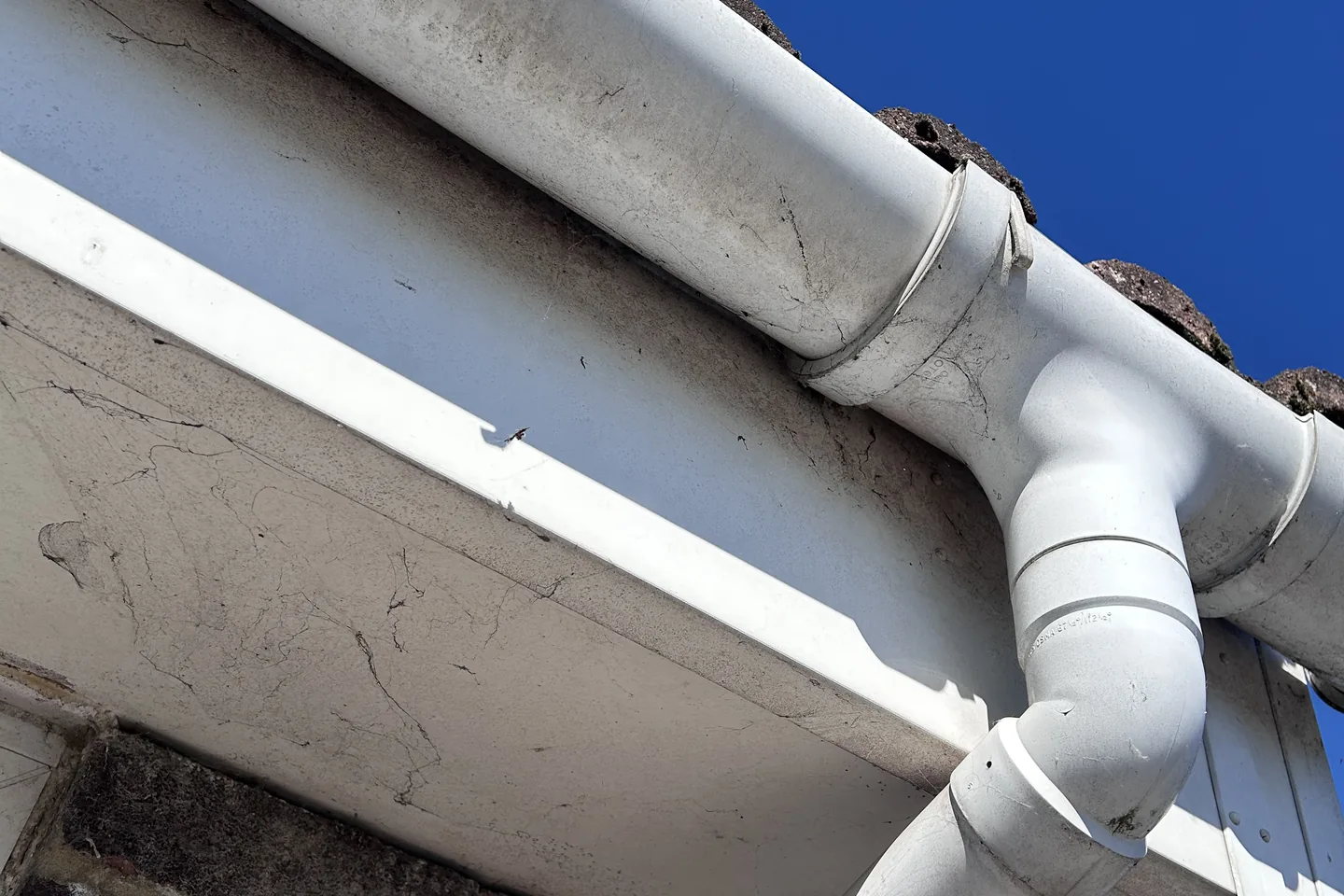
The soffit is the horizontal board that runs along the underside of your roof overhang, between the wall and the gutter. It's what you see when you stand back and look at where your roof meets your walls. It's usually horizontal and often vented to allow airflow into your roof space.
The fascia is the vertical (or nearly vertical) board that runs behind your gutters. It's what gutters are attached to. The fascia sits at the edge of your roof, between the soffit and the gutters, and it's what gets hit by water running off the roof during heavy rain.
Together, they form a protective band around your home. They're usually made of painted wood (in older properties) or uPVC plastic (in modern homes). Their job is simple but critical: to protect the timber of your roof structure and the walls of your home from water damage.
Why They Matter (Beyond Looking Nice)
When fascias and soffits are clean, your property looks well-maintained. What matters is what happens when they get dirty or neglected.
Algae and mould growth. In Essex villages like Clavering, Langley, and Great Chesterford, north-facing or shaded fascias and soffits accumulate algae, moss, and mould. They look dark, stained, and tired. More importantly, that growth indicates moisture, and moisture is your home's worst enemy.
Staining and discoloration. Even without mould, fascias and soffits can become heavily stained from algae, dirt, and mineral deposits from roof runoff. A stained fascia makes an otherwise spotless home look neglected.
Material damage. If fascias and soffits are wooden (common in older properties across Saffron Walden and surrounding areas), dirt and moisture cause rot. Wet timber is rotting timber. Once rot sets in, it spreads quickly and becomes expensive to fix. A small area of rot can become a major structural repair costing thousands of pounds.
Water penetration. Dirty fascias trap moisture against themselves and the timber behind them. Water gets under the boards, seeps into your roof structure, and causes damp inside your home. Attics become damp, ceiling plasterboard gets stained, and you've got a problem that spreads.
Loss of ventilation. Soffits are often vented to allow air circulation. Algae, moss, and debris block these vents. This reduces airflow, traps moisture in your roof space, and can lead to mould in your loft.
The Appearance Problem (It's Real)
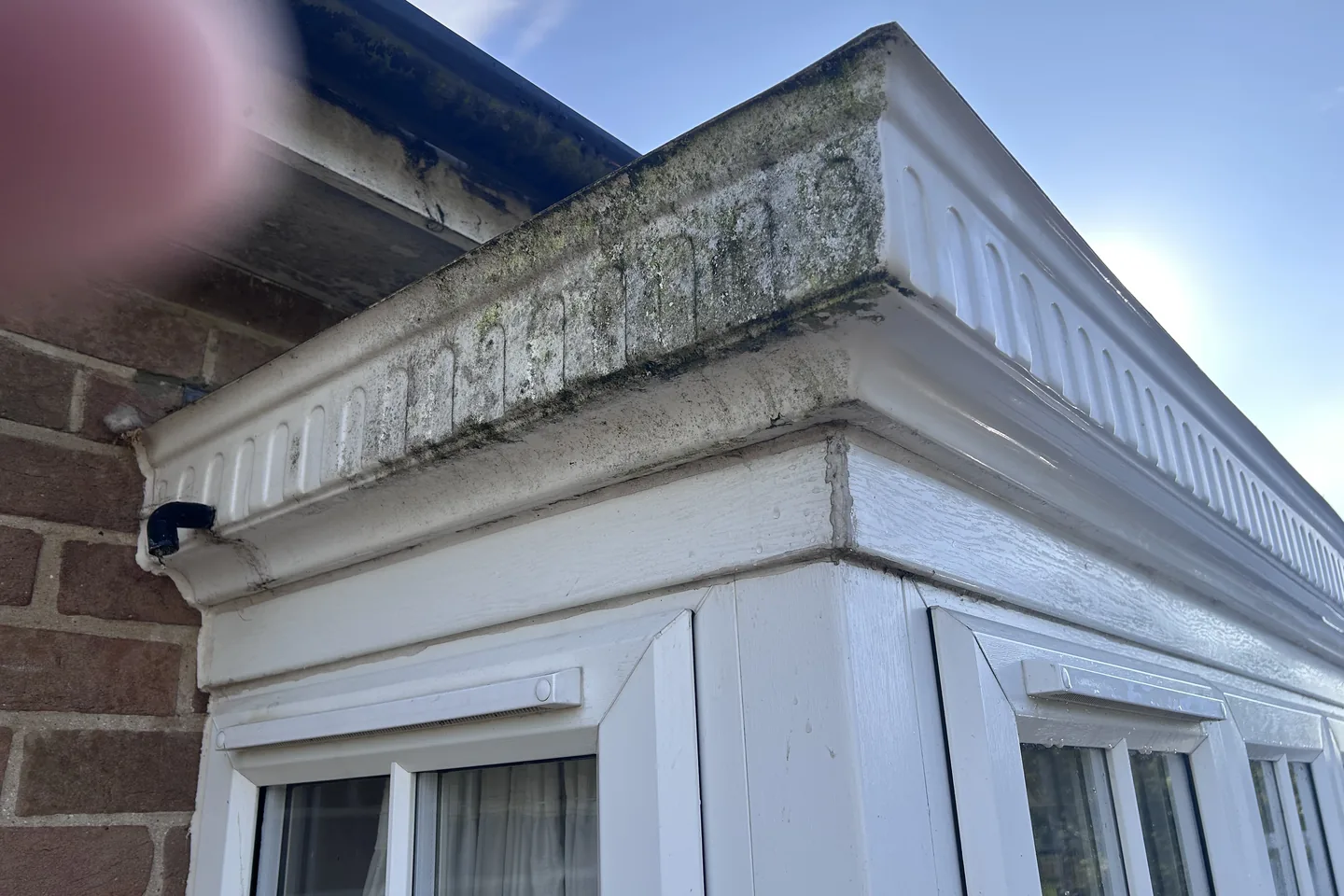
Here's something many homeowners don't realize: your windows can be pristine, your driveway spotless, but if your fascias are dark with algae and mould, your entire home looks tired. Fascias and soffits are the frame of your home. A dirty frame makes everything inside look worse.
In an Essex village like Stansted Mountfitchet or Newport, where properties are often quite close together, a well-maintained fascia is noticed. It's the difference between looking after your home and letting it slide.
How to Clean Them
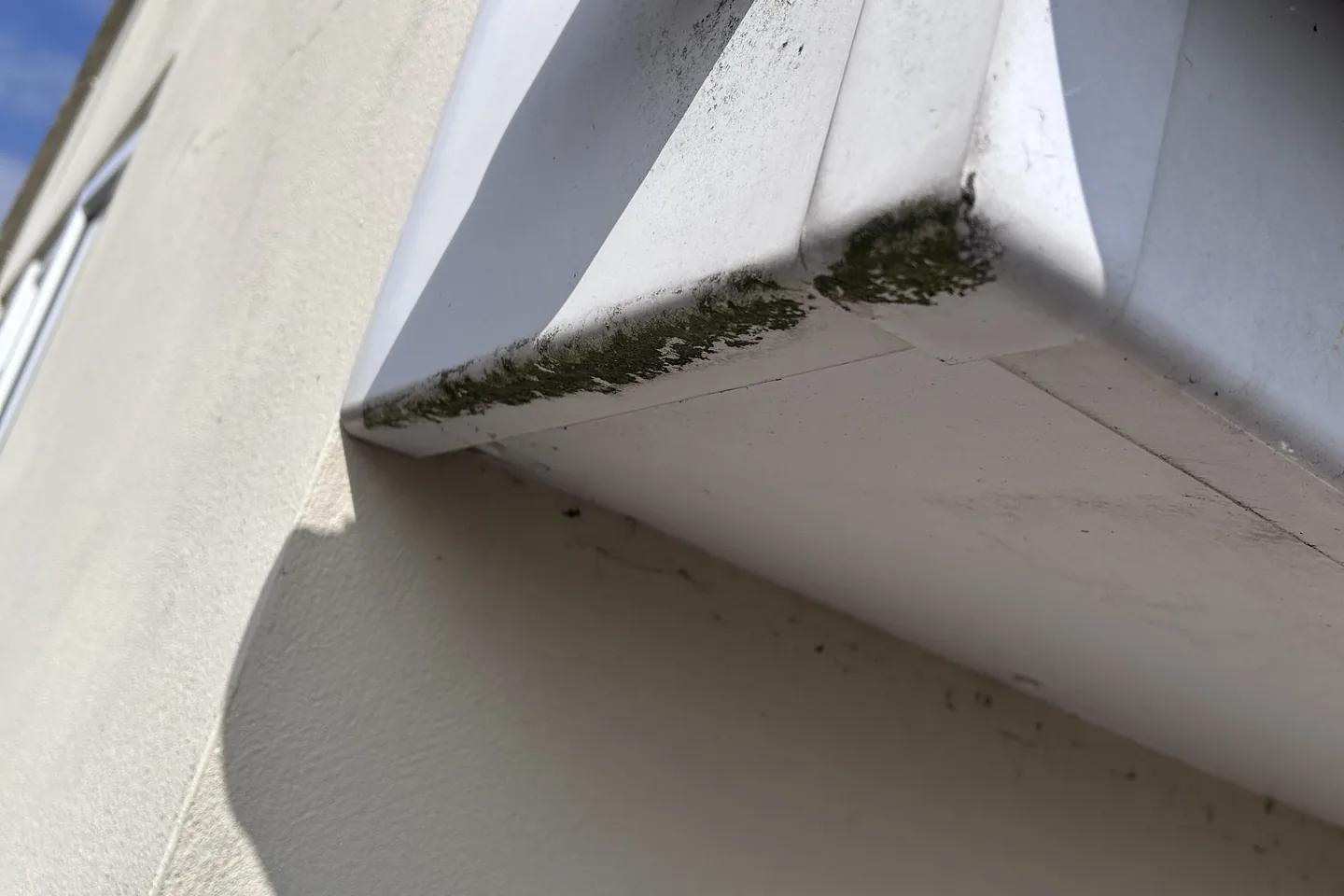
Fascias and soffits require a soft wash, not pressure washing. High pressure can damage the material (especially painted wood), force water under the boards, and potentially damage the vents. A soft wash uses low pressure with biodegradable, algae-killing cleaners. This removes all the mould, algae, and stains without damage.
For wooden fascias and soffits, soft washing is particularly important. It kills mould spores on the surface without soaking the wood. After cleaning, many people opt to paint wooden fascias to restore them and provide additional protection.
uPVC fascias and soffits respond well to soft washing too and clean up dramatically. They'll look like new, and the cleaning prevents algae regrowth for months.
How Often?
In an Essex climate with plenty of shade and moisture, fascias and soffits benefit from cleaning every 1-2 years. If your property is particularly shaded or surrounded by trees (common in villages like Hadstock and Clavering), annual cleaning might be worthwhile. If you're on a south-facing slope with less shade, every 2-3 years is probably sufficient.
The Bottom Line
Fascias and soffits are unsung heroes of home maintenance. They're protecting your roof structure and your walls from water damage while also forming the visible frame of your home. Keeping them clean protects your property from costly rot and water damage. A professional soft wash takes a couple of hours and costs a fraction of what rot repair or water damage costs.
Frequently Asked Questions
Are fascias and soffits the same thing?
No. Soffits are the horizontal boards underneath your roof overhang, between the wall and the gutter. Fascias are the vertical or angled boards behind the gutters. They work together to protect your roof structure from water damage.
Can I pressure wash fascias and soffits?
Not recommended. Pressure washing can damage the material, force water underneath the boards where it causes damage, and potentially crack vents in soffits. A soft wash (low pressure with biodegradable cleaners) is safer and more effective.
How much does it cost to clean fascias and soffits?
Professional soft washing typically costs £80-200 depending on property size and how dirty they are. It's a straightforward job and usually takes 2-3 hours. Prevention through regular cleaning is much cheaper than dealing with rot or water damage.
What happens if I ignore dirty fascias and soffits?
Algae and mould trap moisture, leading to rot in wooden fascias (expensive to repair), water penetration into your roof space, and damp inside your home. Soiled soffits block vents and reduce airflow. The longer you wait, the more damage occurs and the more costly repairs become.
Do I need to replace fascias and soffits if they're rotting?
If rot is surface-level, cleaning and treating with wood preservative can save them. If it's deep, replacement is necessary. This is why regular cleaning matters. You catch and prevent rot before it requires expensive replacement. The clean itself is described in a fascia and soffit clean in Essex.
Ready to Get Started?
Based in Saffron Walden, covering Essex villages. Free quotes within 24 hours, no hard sell.
Book fascia and soffit cleaning from £80
I started window cleaning back in 2022 and launched Ascent Exterior Cleaning in 2024 to offer a wider range of exterior services. Every job is still done by me personally. No subcontractors, no rotating crews. The same pair of hands every time.